People, places and memory
The schoolhouse hidden inside another school
Documented rebuilding; moving method recalled later
Tabernacle’s 1909 school moved down Carranza Road in 1936 and became part of a larger building. A dedication program and later recollections preserve different pieces of that transformation.
The old building inside the new one
The THS building history describes moving the two-room school from the Town Hall site to a four-acre property in 1936. The old structure became one side of the enlarged school, with matching rooms added beside it. Photographs in that history show an earlier shingled roof preserved beneath the later roof. What looks like replacement from outside can also be an act of reuse.
What the dedication program actually records
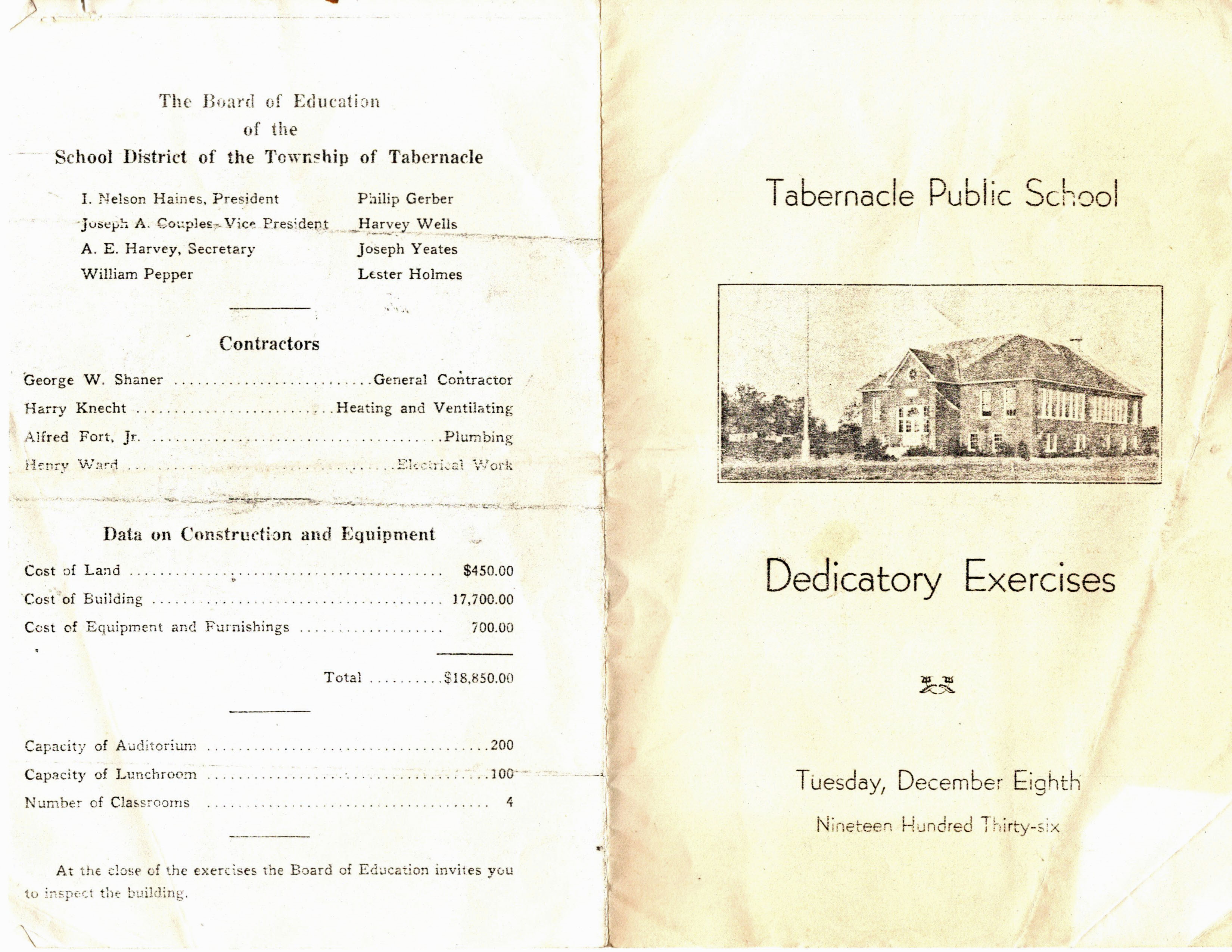
The surviving school-board program dates the dedication to December 8, 1936. Its cost breakdown is unusually useful: $450 for land, $17,700 for the building, and $700 for equipment and furnishings, totaling $18,850. It lists four classrooms and an auditorium capacity of 200. These are the program’s figures; a contemporary educational-news account transcribed on the society page gives a different auditorium capacity. Dedication program, outside pages.
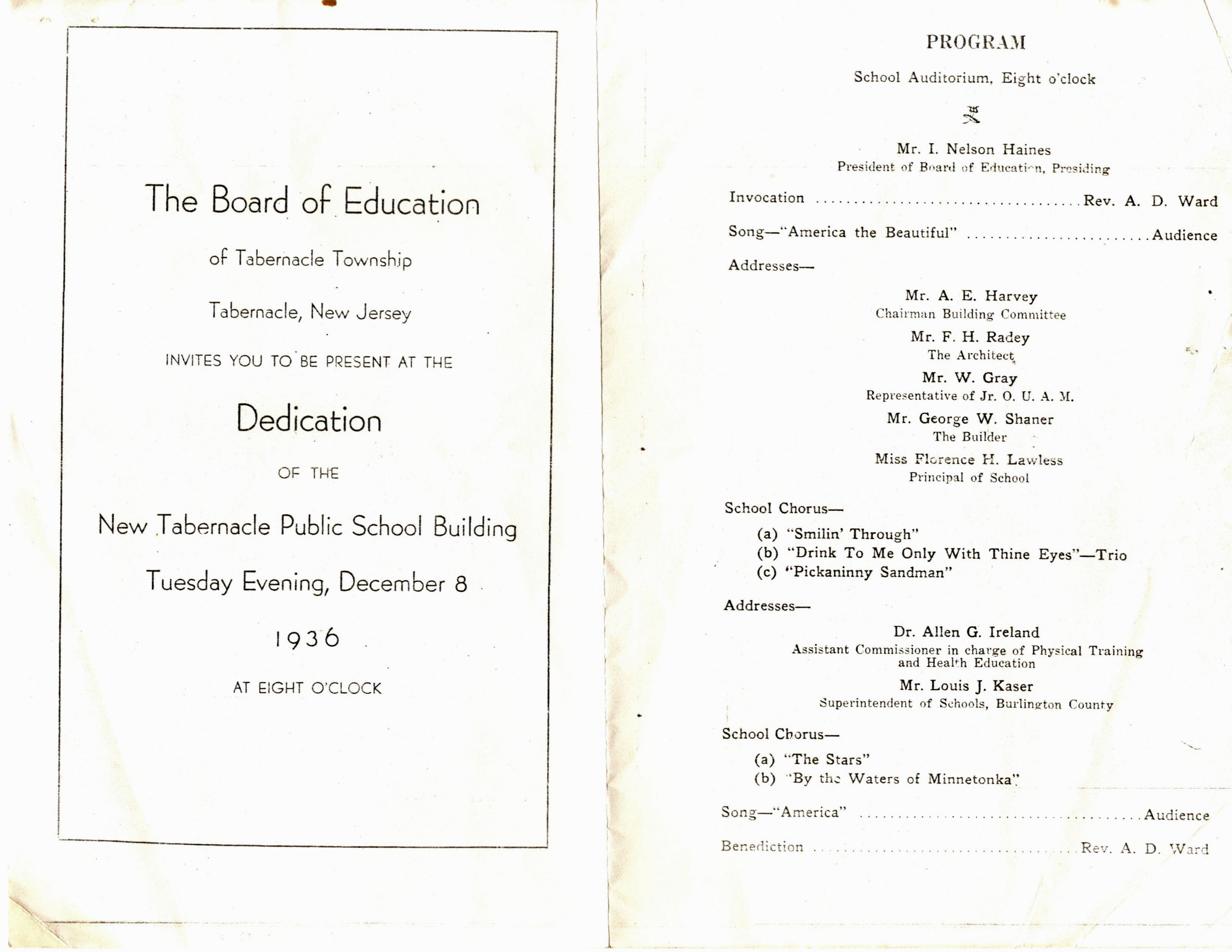
The inside pages name F. H. Radey as architect, George W. Shaner as builder and Florence H. Lawless as principal. They schedule the ceremony for eight in the evening, with school-chorus performances and addresses by school and county officials. The program places the rebuilding within a community event, rather than leaving only a construction date. Dedication program, inside pages.
The horse in the remembered move
In a later interview with Virgil O’Neal and Ralph Gerber, Gerber recalled hearing Kenny describe a horse circling a mechanism anchored farther up the road to draw the building along. He was less certain about the supports under the school. This is a vivid account of a remembered explanation, not a surviving photograph or engineering record of the move.
Sources and research limits
The school-board program supplies the ceremony, people and published costs. The structural account comes from the society’s history and photographs; the moving mechanism comes from oral history. Those sources answer different questions. The original building should also be distinguished from the separate Friendship Bogs one-room school later brought to Tabernacle.