Wild-men reports · Historical mysteries
William Ware: the man behind Stratford’s “cave man” headlines
Contemporary reports; claims distinguished
A 1922 newspaper sensation described a Stratford woodsman as a “wild man”; a local follow-up instead concerned employment, housing, and his children.
A named man, not an unidentified species
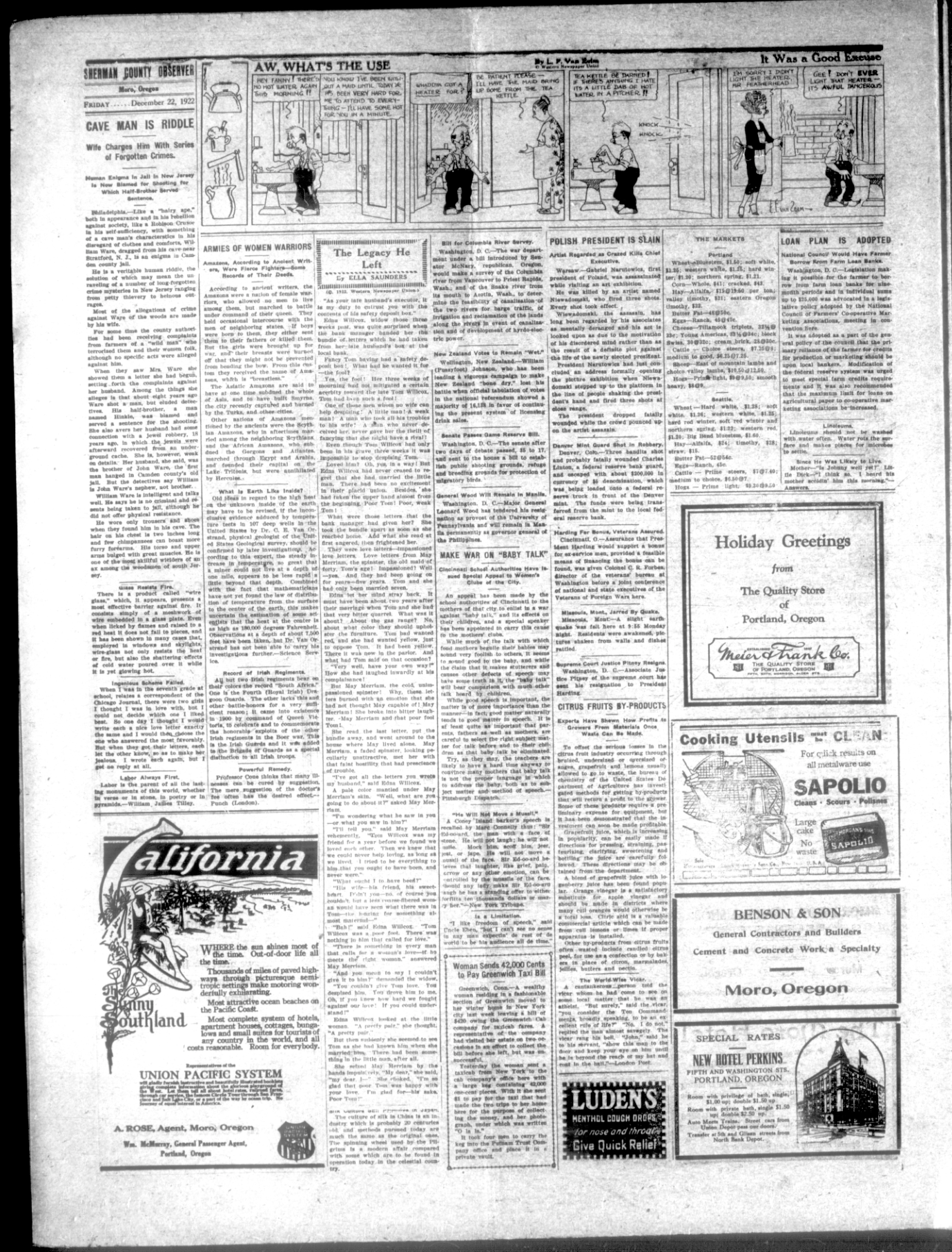
The December 22 Sherman County Observer printed “Cave Man Is Riddle,” a Philadelphia-datelined feature about William Ware’s detention near Stratford. Its sensational comparisons with apes sat beside more ordinary particulars: Ware spoke clearly, denied criminality, offered no physical resistance, and was described as a skilled woodsman. The piece attributed allegations about old crimes largely to his wife and admitted weaknesses in the details. It supplied no conviction establishing them.
The local report that preceded the distant feature
The Camden Courier had already reported on November 28 that Prosecutor Charles Wolverton helped obtain work for Ware. Louise F. Walsh of the Society for the Prevention of Cruelty to Children said a home for the family remained the difficulty; three children were being cared for at Sheltering Arms. This earlier local notice changes the emphasis from a mysterious forest creature to an identified family facing housing and child-welfare problems. The dated articles do not establish the final outcome of the allegations or the family’s later circumstances.
Read the original newspaper
Sources and research limits
- Sherman County Observer, December 22, 1922, page image 4 — Full scan examined; the feature occupies the upper left column. No portrait of Ware appears on this page.
- Camden Courier, November 28, 1922, in the Charles A. Wolverton archive — Transcription reviewed; local follow-up predates the Oregon reprint.