People and communities
Alliance: a farming refuge, one working day at a time
Documented history · Sources compared
A poultry farmer’s diary brings the history of a refugee farming colony down to weather, buildings, eggs and worry.
Land bought on terms
The Alliance Heritage Center traces the colony to Jewish families fleeing Russian persecution in 1882. Its history describes initial farms of thirteen to fifteen acres offered for $350, payable over ten years with interest. It also notes that the terms changed as settlers encountered difficulties. The land was an opportunity accompanied by obligations. Alliance Heritage Center, colony history.
New Year’s work
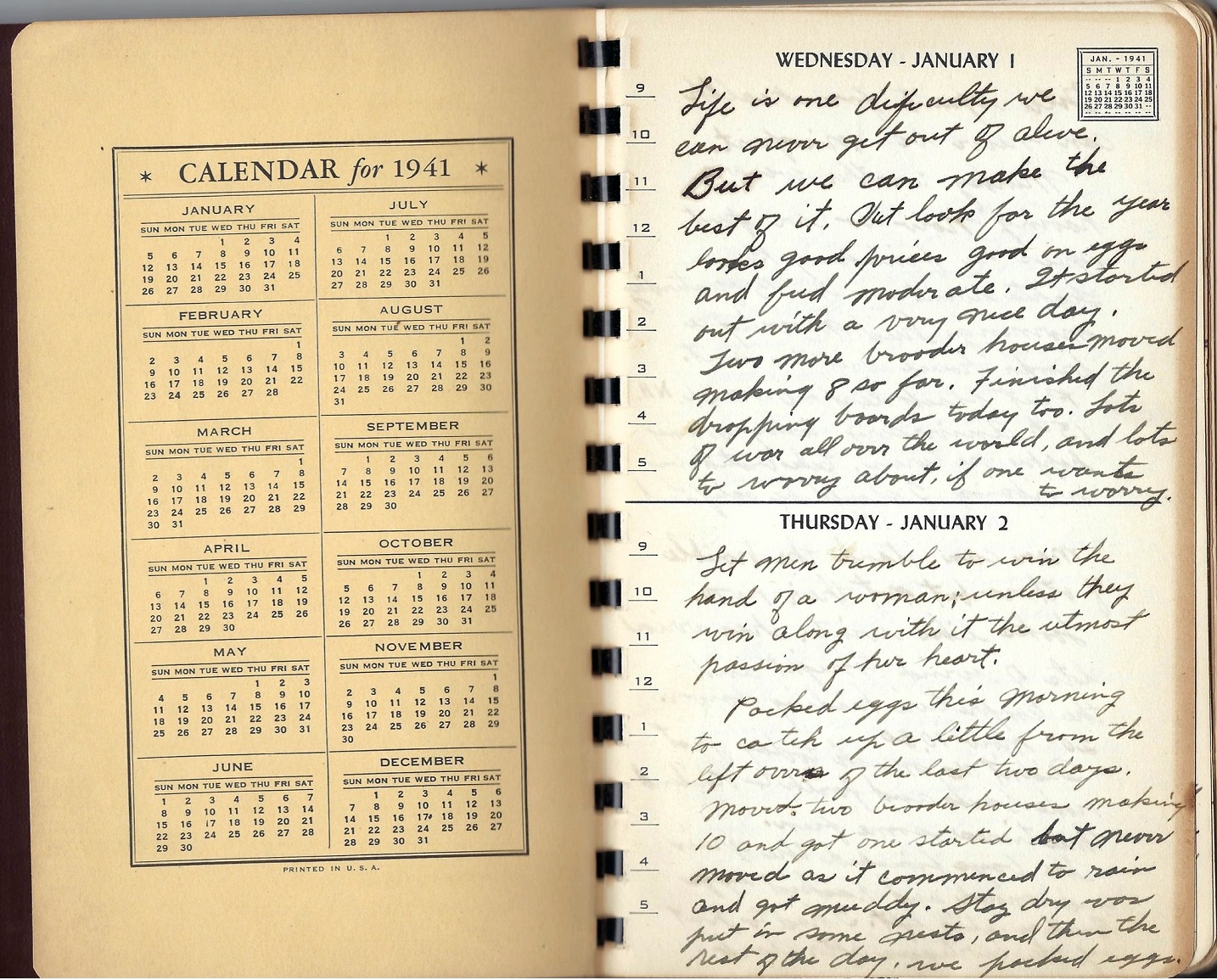
On January 1, 1941, Abe Crystal recorded favorable egg prices, moderate feed prices and work moving brooder houses. His concern about war appeared beside these farm tasks. The following day, packing accumulated eggs continued, while rain and mud interrupted another building move. The manuscript places international anxiety inside a practical work calendar. Abe Crystal diary, January 1–2, 1941.
Buildings compete with the birds for time
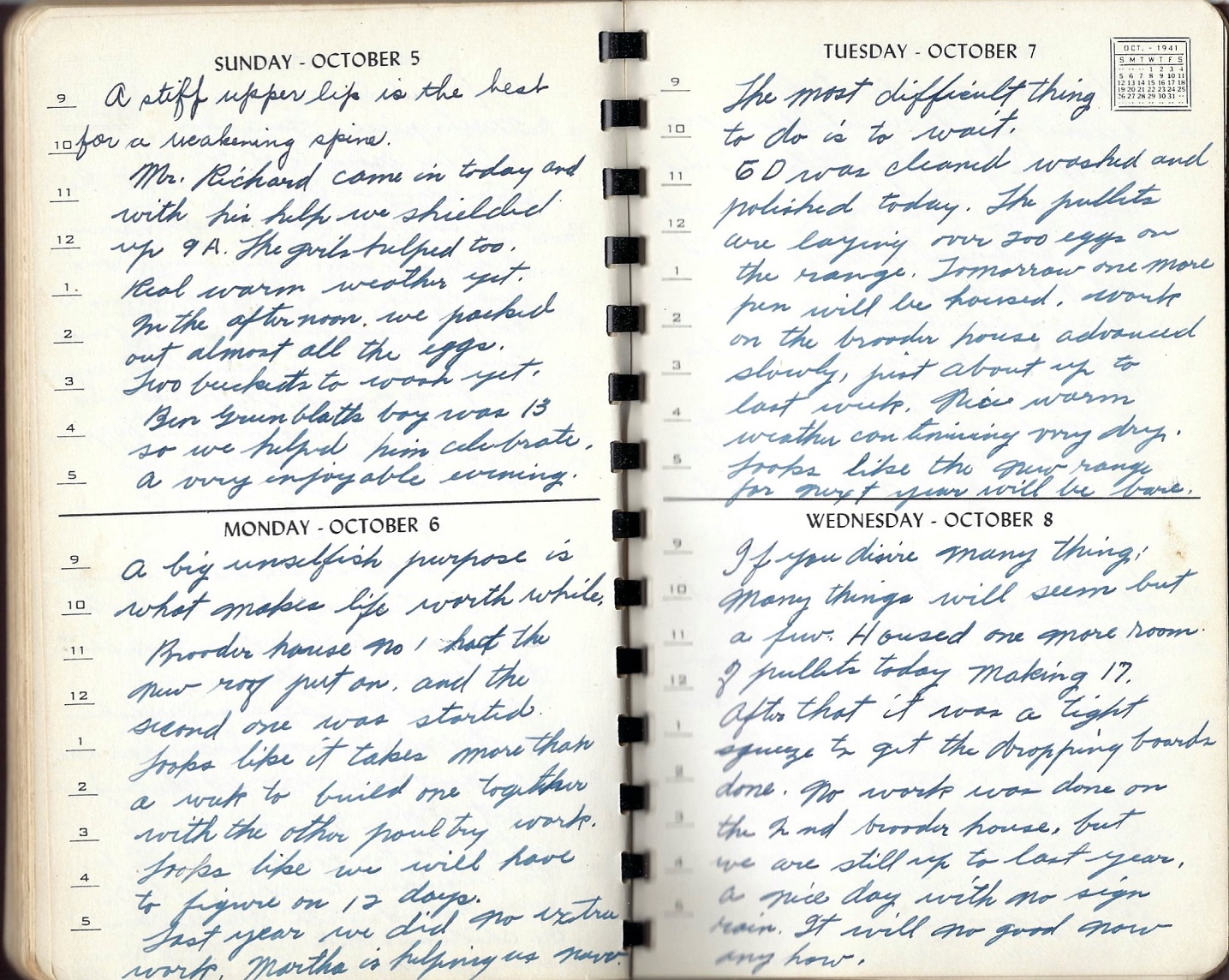
The October pages describe help from others, egg packing and roofs under construction. On October 6, Crystal reckoned that building took longer when fitted around the other poultry work. These selected pages reveal competing demands on a particular farm. They cannot establish the annual profitability or working conditions of every Alliance household. Abe Crystal diary, October 5–8, 1941.
Sources and research limits
- Alliance Heritage Center, colony history — Full account and its references to William Stainsby’s 1901 history read; Stainsby’s original volume was not independently inspected.
- Abe Crystal diary, January 1–2, 1941 — Full-resolution manuscript image inspected directly; identified by the Heritage Center’s farming exhibit.
- Abe Crystal diary, October 5–8, 1941 — Full-resolution manuscript image inspected directly.
- Alliance Heritage Center, farming exhibit — Read the diary provenance: supplied by David Goren. Only the two linked spreads were examined directly.
The diary is a selected surviving record, not a complete set of accounts. Uncertain handwritten building labels and personal identifications are omitted rather than guessed.
Related: Woodbine’s agricultural school