People, places and memory
The Hampton Gate peddler accusation of 1860
Historical allegation; no indictment reported
A boy accused his father of killing a peddler years earlier. Investigators searched near Hampton Gate, but contemporary follow-ups reported no indictment.
An accusation reached Salem
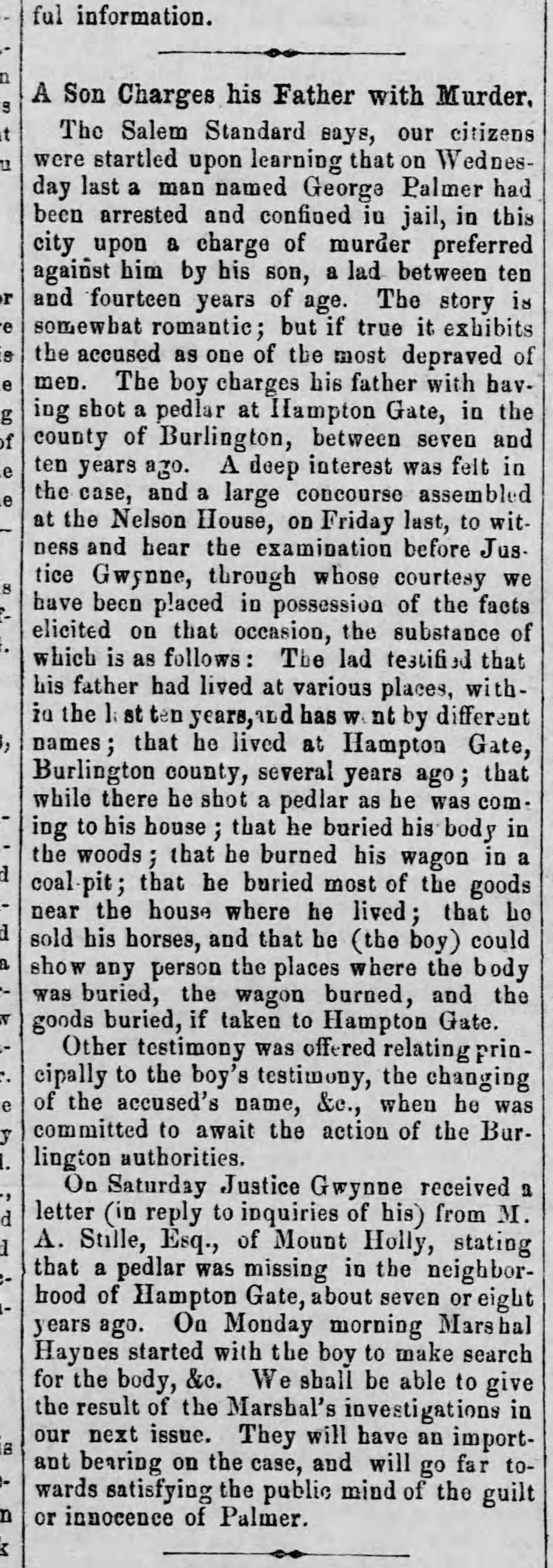
The West Jersey Pioneer of March 3, 1860 reprinted a Salem Standard account of a man called George Palmer, arrested after his young son accused him of shooting a traveling peddler at Hampton Gate seven to ten years before. The boy alleged burial in the woods and destruction of the wagon in a charcoal pit. The report estimated his age at ten to fourteen, leaving substantial uncertainty about both the chronology and his age when the alleged event occurred. These were accusations, not established findings. March 3 report.
Recognition did not locate a grave
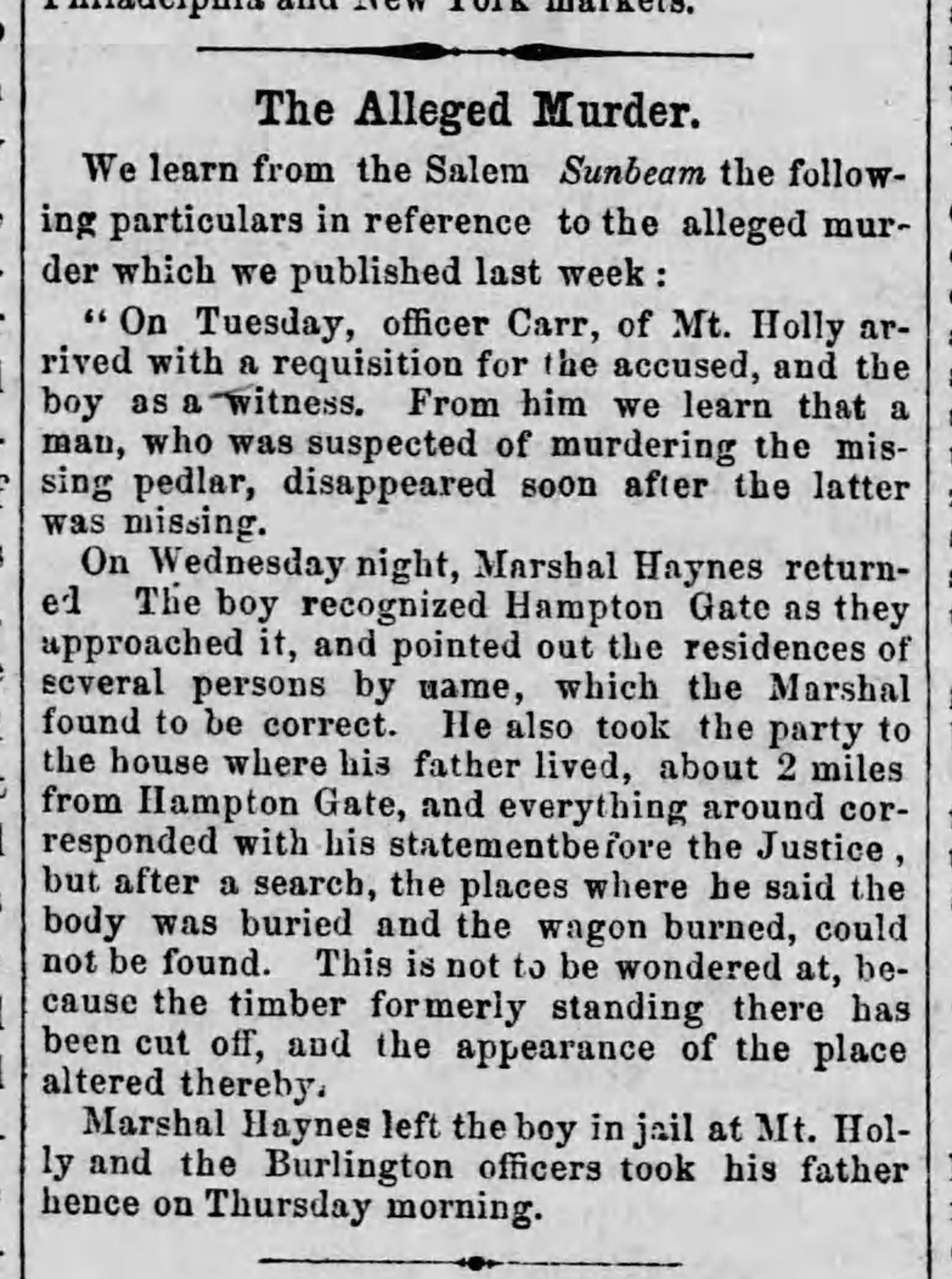
The March 10 follow-up, crediting the Salem Sunbeam, said the boy recognized the neighborhood and led Marshal Haynes to a former family home roughly two miles from Hampton Gate. The search nevertheless failed to locate the alleged burial or burned wagon site. The newspaper suggested logging had altered the landscape. That explanation was a possibility offered by the report, not recovered physical evidence. It also said the boy was left in Mount Holly jail as a witness while his father was transferred there. March 10 follow-up.
The later reports change the story
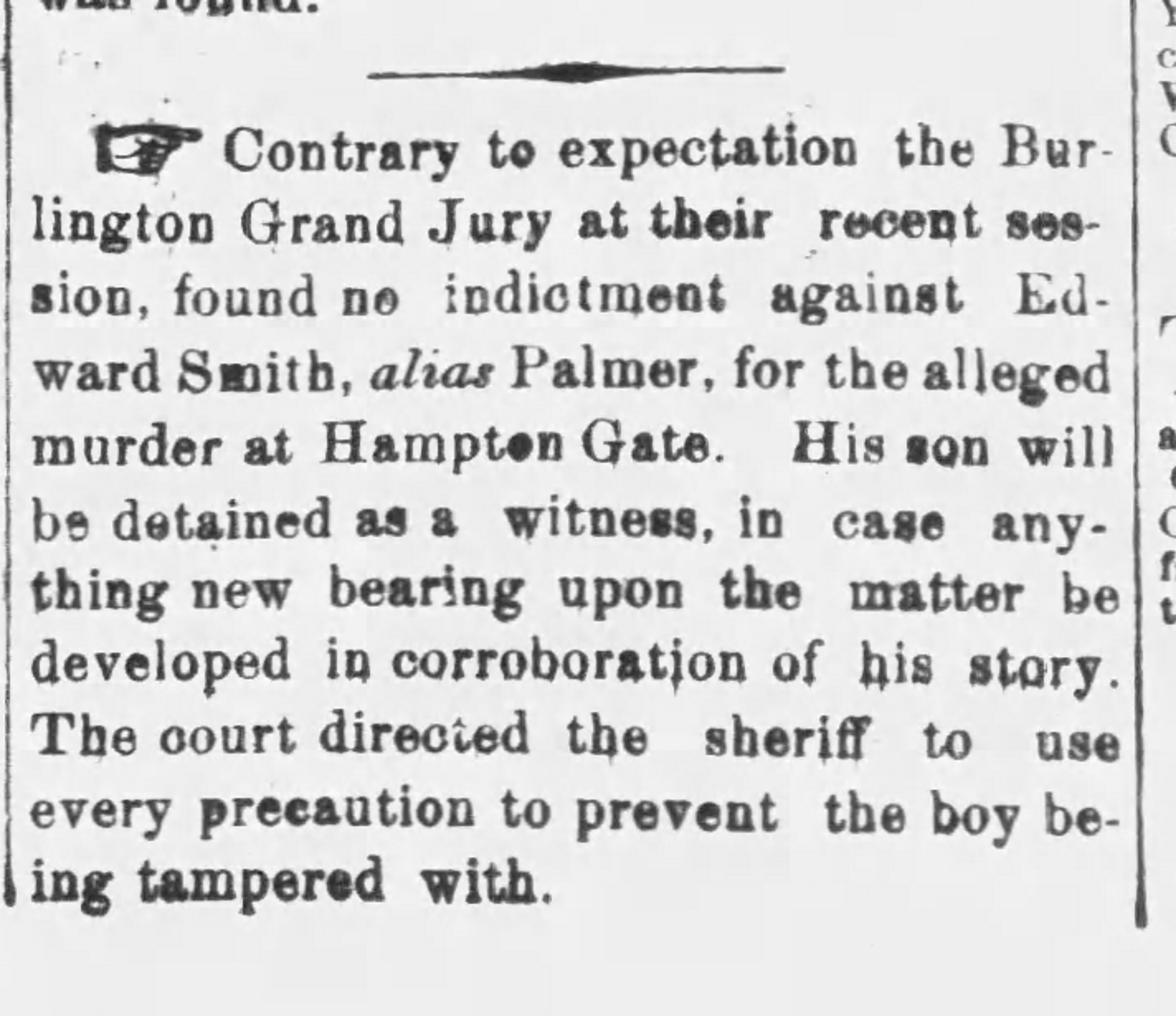
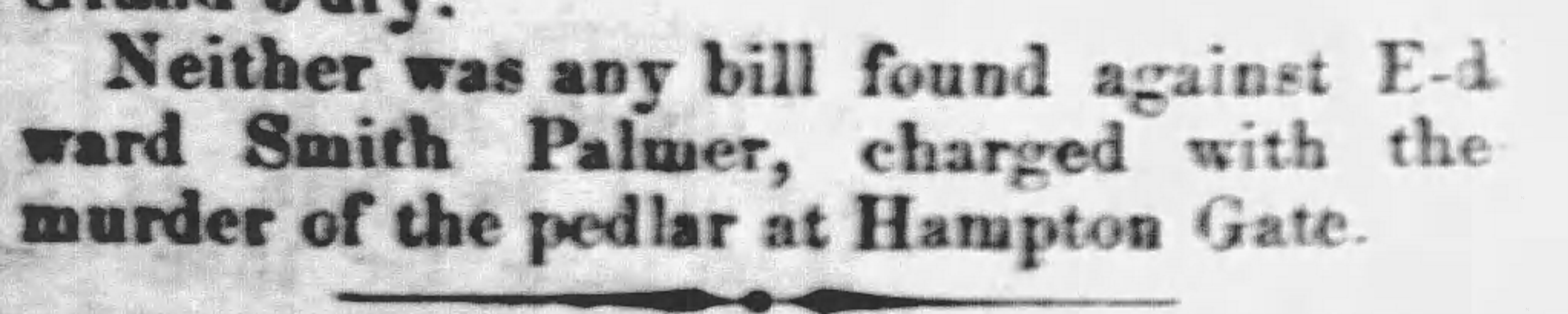
On May 12 the Monmouth Inquirer reported that the Burlington grand jury had returned no indictment against Edward Smith, alias Palmer. It said the son would be detained as a witness while further corroboration was sought. On October 11 the Monmouth Democrat again reported that no bill had been found against Edward Smith Palmer. Neither notice establishes a trial or conviction. May 12 notice; October 11 notice.
Sources and research limits
All four clippings were visually inspected in the THS collection. Their names differ, but the later notices expressly connect Palmer to the Hampton Gate allegation. No victim identification, recovered remains or later court disposition was located in this review. A failed prosecution does not settle whether a disappearance occurred; it does prevent presenting the father as a convicted killer. The alleged site should not be equated with the tavern itself.