Read the engine.
Keep the unknowns visible.
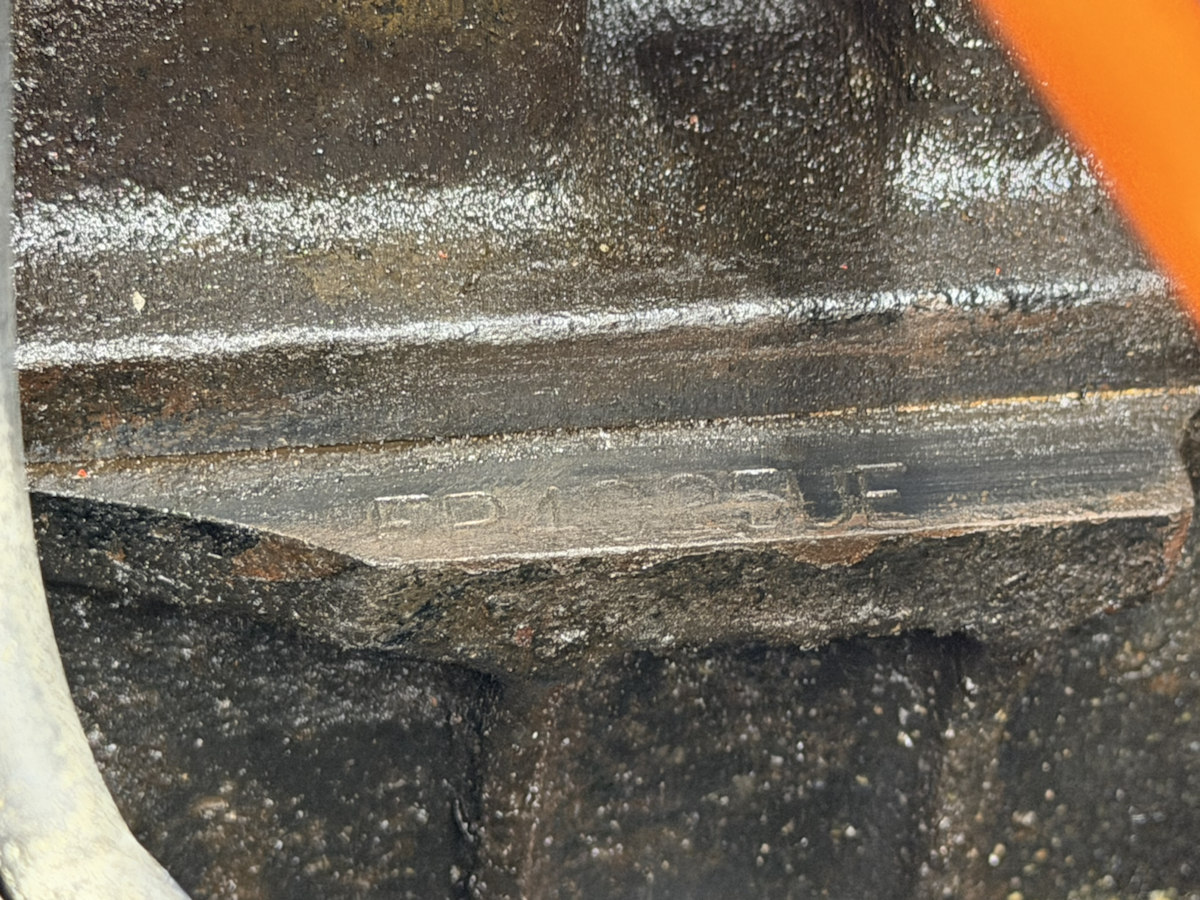
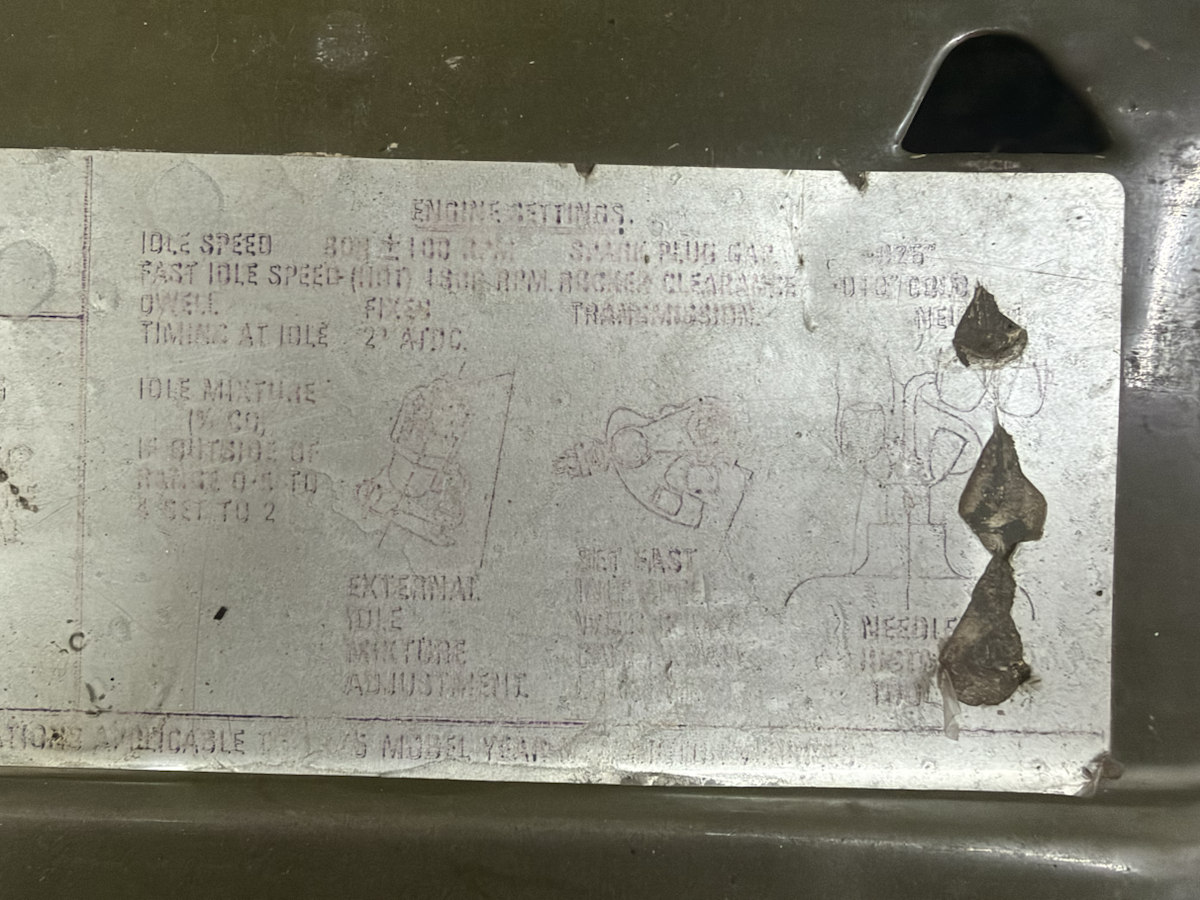
Two photos from the latest set give us an engine-block stamping and a surviving under-bonnet settings label. Together they narrow the reference material for this car. They do not establish that the engine, label, ignition or emissions equipment are original.
Record these separately
The owner reads the worn engine stamp as FP4025UE. The photographed label appears to state idle 800 ±100 rpm and timing at idle 2° ATDC. These are observed markings and a provisional reading, not measurements of the running engine.
Inspect the actual evidence
What the sources support
| Mark or setting | Reading from this car | Independent comparison | Limit |
|---|---|---|---|
| Engine prefix | FP is visible on the block. | The Moss Sprite/Midget catalog identifies FP as the Midget 1500 engine prefix and distinguishes it from the Spitfire's FM. | A shared engine family does not make all Midget and Spitfire parts interchangeable. |
| Serial and suffix | The owner transcribes FP4025UE; UE is visible in the photo. | Spridgets.de's model guide interprets UE as the North American engine suffix. | No inspected factory engine-number table dates serial 4025 or links it to this chassis. The separate GAN6-U chassis plate is still needed. |
| Idle | The faded label appears to read 800 ±100 rpm. | The 1975 factory tuning table, PDF p. 17 gives 700–900 rpm. | The ranges agree, but no actual idle measurement has been taken. |
| Timing | The label reads 2° ATDC at idle. | The same 1975 factory table gives 2° ATDC, stroboscopic at 800 rpm. | Confirm the fitted distributor, emissions equipment and full factory procedure before adjustment. A matching printed value does not prove the present timing. |
The MG Car Club's production table dates chassis ranges, not FP engine serials. It cannot date FP4025UE on its own.
Use this for a real inspection
- Photograph the complete GAN6-U chassis plate and surrounding bodywork; transcribe it separately from the GU47T front-panel plate and the FP engine stamp.
- Inspect the engine stamp in raking light and take one wider orientation photo plus several close views. Record uncertain characters as “?” until readable; preserve the original metal surface.
- Photograph the whole under-bonnet label square-on and its location. Keep unreadable lines unfilled rather than borrowing settings from another model year.
- Record the fitted distributor number, carburetor tag and emissions components and hoses before selecting a tune procedure or variant-specific parts.
- When a running baseline is safe, record the measured warm idle and timing, the instrument used and the procedure followed. Keep those measurements distinct from the label's printed values.